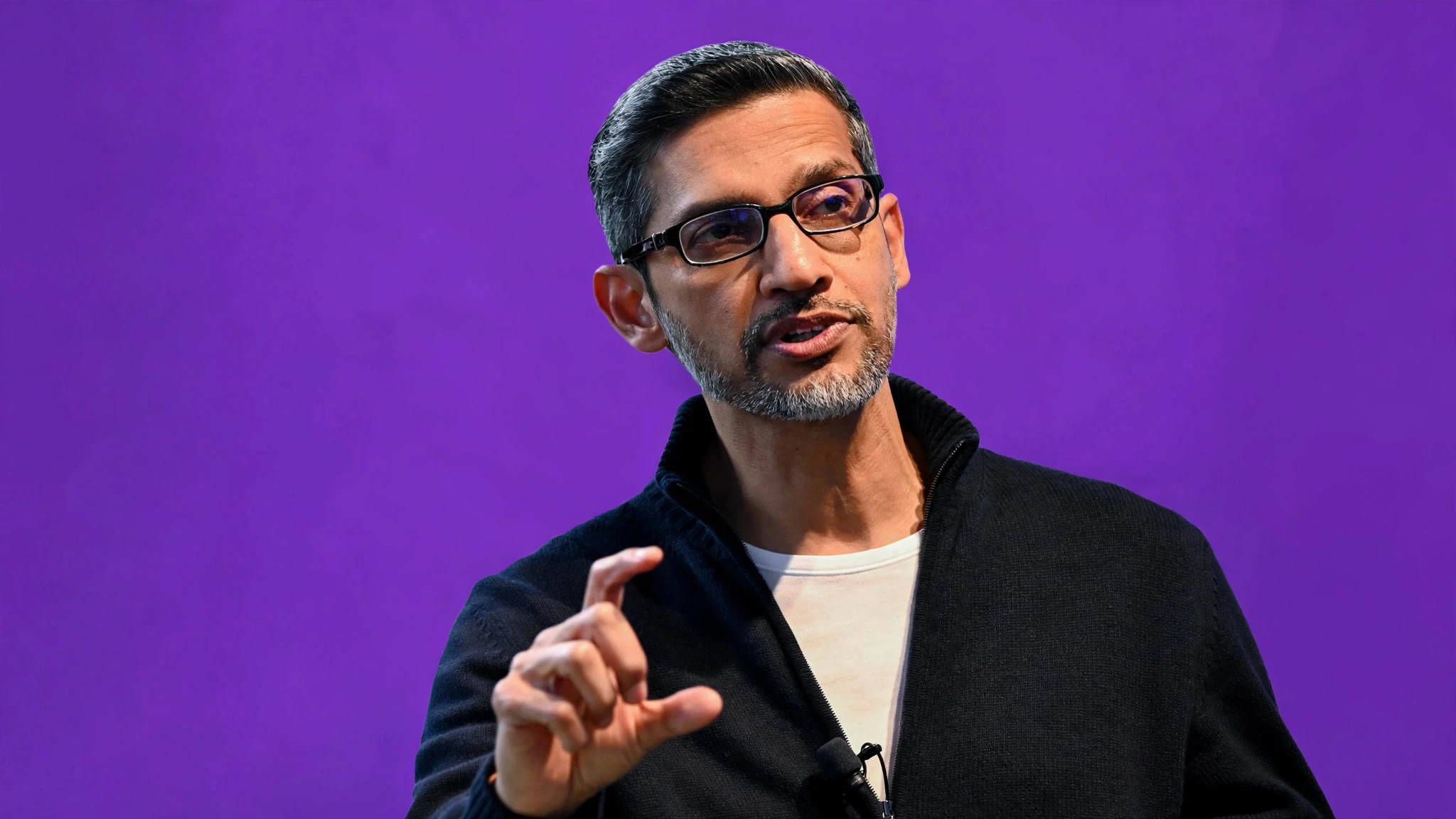
Sundar Pichai and Carl Icahn represent two different routes to influence in business. Pichai built his career through technology products and executive leadership at Google. Icahn became known for buying substantial stakes in companies and pressing for changes he believed would increase shareholder value. Their careers intersect indirectly through Motorola Mobility, the smartphone manufacturer Google acquired in 2012. Understanding that connection requires separating the investor’s involvement in Motorola from Pichai’s responsibilities at Google. The transaction happened before Pichai became Google’s chief executive, making the sequence of events essential to an accurate account.
Who Are Sundar Pichai and Carl Icahn?
The distinction between Sundar Pichai and Carl Icahn begins with their professional roles. One leads a technology company’s operations and strategy; the other uses investment ownership to influence businesses.
| Detail | Sundar Pichai | Carl Icahn |
|---|---|---|
| Main professional role | Technology executive | Investor and shareholder activist |
| Principal affiliation | Google and Alphabet | Icahn Enterprises |
| Educational background | Engineering studies in India, master’s degree from Stanford, MBA from Wharton | Philosophy degree from Princeton |
| Early career milestone | Joined Google in 2004 | Founded Icahn & Co. in 1968 |
| Connection to the Motorola story | Google executive who later assumed responsibility for Android | Major Motorola Mobility shareholder during Google’s acquisition |
Sundar Pichai’s Rise Through Google
Pichai grew up in Chennai, India, and studied engineering at the Indian Institute of Technology. He continued his education at Stanford University and the Wharton School before joining Google.
His early work included Google Toolbar and Chrome. These products placed him at the center of how people accessed the internet, giving him responsibilities that expanded beyond an individual application.
In March 2013, Google announced that Pichai would lead Android alongside his existing work with Chrome and Apps. In 2014, his responsibilities expanded to product and engineering leadership across Google’s products and platforms.
His appointment as Google CEO was announced in August 2015 during the restructuring that created Alphabet. He became Alphabet CEO in December 2019, taking responsibility for the parent company as well.
Carl Icahn’s Route From Wall Street to Corporate Activism
Icahn grew up in Far Rockaway, Queens, and graduated from Princeton University in 1957 with a degree in philosophy. He began his Wall Street career in 1961 and established Icahn & Co. seven years later, focusing on arbitrage and options trading.
From 1978, he began taking substantial, sometimes controlling, positions in individual companies. His investments have included businesses across technology, energy, transportation, entertainment, and manufacturing.
Icahn’s approach often involves challenging management’s decisions. An activist investor may seek board representation, asset sales, a corporate separation, or changes in how a company uses its capital.
He serves as chairman of Icahn Enterprises, a diversified holding company. That position should be distinguished from running every company in which he invests: a shareholder can influence a business without managing its daily operations.
How Motorola Connects Sundar Pichai and Carl Icahn
Motorola supplies the clearest documented corporate link between Sundar Pichai and Carl Icahn. However, the events concern their respective business environments rather than establishing a personal partnership.
Motorola Became Two Separate Companies
On January 4, 2011, Motorola completed its separation into two independent publicly traded businesses: Motorola Mobility and Motorola Solutions.
Motorola Mobility contained the consumer mobile-device business, including smartphones. Motorola Solutions continued with a different business focused on communications products and services for government and enterprise customers.
This distinction matters because Google acquired Motorola Mobility. It did not acquire Motorola Solutions.
Icahn Had a Financial Stake in the Acquisition
Icahn was a major Motorola Mobility shareholder when Google announced its proposed acquisition. Motorola Mobility’s 2011 merger proxy listed Icahn and related entities as beneficial owners of approximately 11.39% of its common stock.
Before the deal, Icahn had urged the company to consider separating its patent portfolio to capture its value. Wireless patents had become strategically important as smartphone companies faced disputes over intellectual property.
The merger documents also described a voting agreement under which Icahn and his affiliates would support the transaction with their shares. His involvement was therefore concrete: he held a substantial ownership position and supported the proposed sale.
Google’s Purchase Came Before Pichai Led Android
Google announced its agreement to acquire Motorola Mobility on August 15, 2011, in a transaction valued at approximately $12.5 billion. The acquisition closed on May 22, 2012.
Larry Page was Google’s CEO during both announcements. Pichai took responsibility for Android in March 2013, after Google had completed the purchase.
That chronology places Pichai in Google’s subsequent Android leadership, rather than identifying him as the chief executive responsible for the acquisition. The documented roles do not establish a jointly led deal between Sundar Pichai and Carl Icahn.
Why Motorola’s Patents Mattered to Google
Google’s explanation for the acquisition included strengthening its patent portfolio to help protect Android against intellectual-property threats.
Android supported an ecosystem of device manufacturers, developers, and mobile carriers. Patent disputes could affect the companies making phones that used Google’s operating system, making intellectual property relevant beyond Motorola’s own devices.
Google also said Motorola would operate as a separate business and that Android would remain open. These commitments addressed the practical question of how Google would own a handset manufacturer while continuing to work with other hardware partners.
The two sides approached Motorola from different positions. Icahn’s involvement concerned an investment and the value available to shareholders. Google’s stated rationale concerned mobile technology, patents, and the Android ecosystem.
What Happened When Lenovo Bought Motorola?
Lenovo completed its acquisition of Motorola Mobility from Google on October 30, 2014. The purchase price was approximately $2.91 billion, subject to adjustments.
Google retained ownership of a majority of Motorola Mobility’s patent portfolio. Motorola received a license to that portfolio and retained more than 2,000 patent assets, alongside its brand and other intellectual property.
Consequently, comparing the $12.5 billion purchase with the $2.91 billion sale does not, by itself, calculate Google’s financial result. The assets transferred in the two transactions differed, and Google kept substantial intellectual property.
For the Sundar Pichai and Carl Icahn story, the sale adds useful context: Motorola’s ownership changed again while Android remained part of Google’s business.
Two Different Ways to Influence a Company
Comparing Sundar Pichai and Carl Icahn helps explain the distinction between executive authority and shareholder influence.
A chief executive coordinates people, products, investment decisions, and business priorities from within an organization. An activist shareholder uses ownership rights and persuasion to press for decisions at a company in which they have invested.
These roles can overlap in their concern for performance and capital allocation. They nevertheless involve different responsibilities. Product success, investment returns, and corporate governance are connected, but they are not interchangeable measures of achievement.
FAQs About Sundar Pichai and Carl Icahn
What is the connection between Sundar Pichai and Carl Icahn?
Their careers connect indirectly through Motorola Mobility. Icahn was a major shareholder during Google’s acquisition, while Pichai was a Google executive who later became responsible for Android.
Did Sundar Pichai and Carl Icahn acquire Motorola together?
Google acquired Motorola Mobility. Icahn participated as a shareholder supporting the transaction. Larry Page was Google’s CEO when the deal was announced and completed.
Was Pichai Google’s CEO when it bought Motorola Mobility?
No. The acquisition closed in May 2012. Pichai’s appointment as Google CEO was announced in August 2015.
What did Carl Icahn want Motorola Mobility to do?
Before Google announced its acquisition, Icahn urged Motorola Mobility to consider separating its patent portfolio to capitalize on the value of wireless intellectual property.
Does Google still own Motorola Mobility?
Google sold Motorola Mobility to Lenovo in 2014. It retained a majority of the patent portfolio as part of that transaction.
Conclusion
Sundar Pichai and Carl Icahn belong to the same broad business story through Motorola, but their roles were distinct. Icahn’s involvement centered on ownership and shareholder value. Pichai’s career centered on product development and leadership at Google. Following the transaction dates explains the connection accurately without turning an indirect corporate link into a personal partnership.
Read also: Bob Chapek and John Paulson: Two Paths to Business Power