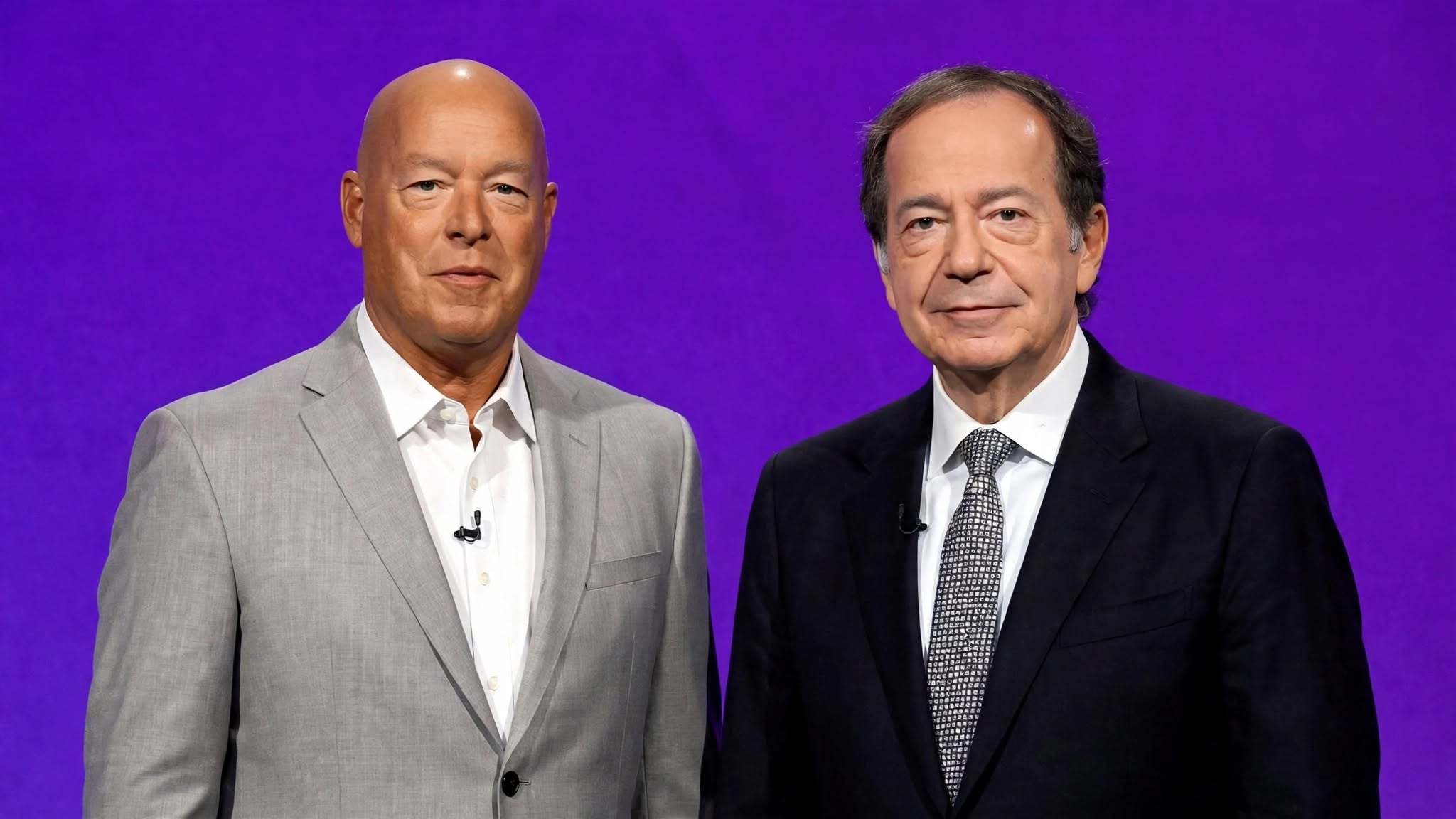
Bob Chapek and John Paulson built their reputations in different corners of American business. Chapek rose through The Walt Disney Company before becoming its chief executive in 2020. Paulson founded an investment firm and became known for betting against mortgage securities before the financial crisis. Their careers offer a useful comparison between managing a global entertainment company and investing in financial markets. No direct business partnership between them was established by the primary sources reviewed for this article. The clearest way to understand these two figures is through the decisions, responsibilities, and turning points that shaped their work.
| Career detail | Bob Chapek | John Paulson |
|---|---|---|
| Principal business association | The Walt Disney Company | Paulson & Co. |
| Industry | Entertainment and consumer experiences | Investment management |
| Route to prominence | Promotion through Disney’s operating divisions | Establishing his own investment firm |
| Defining milestone | Appointed Disney CEO in February 2020 | Profited from a bet against the mortgage market |
| Leadership setting | A publicly traded entertainment company | A firm he founded in 1994 |
Sources: Disney’s leadership announcements, its SEC filing, Bausch + Lomb’s Paulson biography, and Harvard Business School’s profile.
Bob Chapek’s Rise Through Disney
Chapek joined Disney in 1993 after working in brand management at H.J. Heinz and advertising at J. Walter Thompson. His Disney career included home entertainment, film distribution, consumer products, and theme parks.
He became chairman of Walt Disney Parks and Resorts in 2015, then chairman of Disney Parks, Experiences and Products when that segment was created in 2018. Disney appointed him CEO on February 25, 2020, with Bob Iger moving into the executive chairman position.
A Leadership Transition Interrupted by the Pandemic
Within weeks of Chapek’s appointment, Disney’s theme parks and most content production shut down because of COVID-19. His early responsibilities therefore included managing a major interruption to the company’s operations.
Disney’s board unanimously extended his CEO contract for three years on June 28, 2022. The announcement praised his pandemic leadership and the company’s transformation strategy. Less than five months later, the board replaced him with Iger. Disney’s SEC filing states that it terminated Chapek’s employment without cause on November 20, 2022; he also resigned from the board under his employment agreement.
The Financial Pressures Near the End of His Tenure
Disney’s fiscal fourth-quarter results, released on November 8, 2022, show the competing demands facing its leadership. Direct-to-consumer revenue rose 8% to approximately $4.9 billion, while that business recorded an operating loss of roughly $1.5 billion. Disney attributed the increased loss partly to higher programming, production, marketing, and technology costs at Disney+.
Meanwhile, Parks, Experiences and Products generated approximately $7.9 billion in operating income for the full fiscal year. The contrast helps explain the management challenge: a recovering experiences business existed alongside an expensive streaming expansion. These figures describe the business conditions before Chapek’s departure; they do not establish a single explanation for the board’s decision.
John Paulson’s Route to Investment Success
Paulson’s path involved founding a business rather than advancing through one corporation. Before establishing Paulson & Co., he was a managing director in mergers and acquisitions at Bear Stearns and a partner at Gruss Partners. Those roles placed him in the business of evaluating financial transactions.
He established Paulson & Co. in 1994. Harvard Business School’s profile describes an initially difficult effort to attract clients: he managed his own money and approached prospective investors before gradually building the firm’s assets.
Understanding His Mortgage-Market Bet
Paulson began researching mortgage bonds in 2005. He identified deteriorating loan quality within a system that continued to package mortgages into securities and sell them globally. His decision to bet against that market became the defining investment of his career.
The investment logic differed from running an operating company. An investor can take a position based on an expectation that an asset will lose value. A corporate executive must make decisions about the business itself, including products, spending, staffing, and customer relationships. Paulson’s mortgage trade illustrates the first role; Chapek’s Disney responsibilities illustrate the second. This is an analytical comparison of their work, rather than a claim that they followed competing versions of the same strategy.
Paulson’s Harvard Gift and Educational Legacy
On June 3, 2015, Harvard announced Paulson’s $400 million endowment gift to its School of Engineering and Applied Sciences. The university described it as the largest gift in its history at that time and announced that the school would bear his name.
“There is nothing more important to improve humanity than education,” Paulson said in Harvard’s announcement of the gift.
The endowment supported faculty development, research, scholarships, and financial aid. Its purpose extended beyond business education: the recipient school covered engineering and applied sciences, connecting Paulson’s philanthropy to scientific research and technical training.
What Their Careers Reveal About Business Leadership
The central distinction is the source of each man’s authority. Chapek received responsibility for an established company through a board appointment. Paulson created the firm through which he developed his investment career. Their histories consequently call for different measures of achievement.
Disney’s segment results make it possible to examine operating performance across businesses with different costs and revenue models. Paulson’s mortgage trade is better understood through the quality of his market judgment and the outcome of a particular investment thesis. Treating both careers simply as stories about powerful businessmen would obscure those practical differences.
Frequently Asked Questions
When Was Bob Chapek Disney’s CEO?
Chapek became CEO in February 2020. His employment as CEO ended on November 20, 2022, when Disney appointed Bob Iger to return to the position.
What Did Bob Chapek Study?
He earned a bachelor’s degree in microbiology at Indiana University Bloomington and an MBA at Michigan State University. His academic background preceded his work in marketing and entertainment.
Where Did John Paulson Receive His Business Education?
Paulson received his undergraduate degree from New York University in 1978 and his MBA from Harvard Business School in 1980. At Harvard, he graduated as a Baker Scholar.
What Does Betting Against Mortgage Securities Mean?
It means taking an investment position designed to benefit when mortgage-related assets decline in value. Such a position can lose money if the expected decline fails to occur or the investment’s timing proves wrong.
Was Paulson’s $400 Million Gift for Harvard Business School?
Although Paulson attended Harvard Business School, the $400 million gift supported the School of Engineering and Applied Sciences. Its purposes included scholarships, financial aid, research, and faculty development.
Conclusion
Bob Chapek and John Paulson offer distinct examples of business leadership. Chapek’s story centers on corporate operations, succession, and a difficult period at Disney. Paulson’s centers on founding an investment firm, identifying mortgage-market weaknesses, and funding education. Understanding their actual roles makes the comparison more useful than assuming a shared business history.
Read also Kerri Browitt Caviezel: From Basketball Standout to Educator